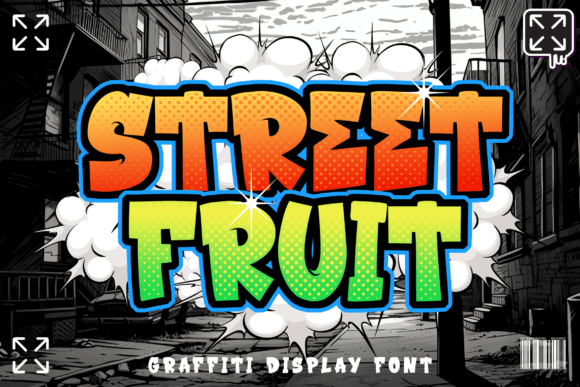
Street Fruit: A Bold Display Typeface for Urban Branding
I remember staring at a blank brand board for a new local skate shop, the cursor blinking on a screen that felt too sterile. The client wanted something that screamed rebellion without looking messy or unprofessional. That was the moment I decided to test Street Fruit, a bold and modern display graffiti font designed to add an urban edge to projects that need to make a statement. It wasn't just about picking a typeface; it was about finding a visual voice that could translate raw street energy into a cohesive brand identity.
Street Fruit for Logo Design and Creative Studio Identity
When you place Street Fruit into your initial logo concepts, the immediate impact is undeniable. Unlike generic sans serif fonts that often feel safe and corporate, this display font brings a distinct personality that captures attention instantly. During my testing phase for a creative studio rebrand, I used the heavy weights of Street Fruit as the primary logotype. The thick strokes and slightly irregular edges gave the mark a hand-drawn authenticity while maintaining the structural integrity needed for vector scaling. It works exceptionally well when paired with a clean sans serif font for secondary information, creating a perfect balance between edgy flair and professional readability. If your goal is to establish a memorable brand identity for a fashion label, music venue, or urban apparel line, Street Fruit serves as a powerful anchor that sets the tone immediately.
Street Fruit on Packaging Mockups and Product Labels
The true test of any premium font comes when you move from digital screens to physical surfaces, and Street Fruit handles packaging design with surprising finesse. I applied the typeface to a mockup for a limited-edition energy drink, where the bold lettering stood out vividly against matte black cardboard. Because it is classified as a display font, it demands space, which is ideal for product labels where the name needs to be the hero. The graffiti-inspired curves allow it to wrap around corners or fit into circular badges without losing its character. However, I noticed that for very small product codes or legal disclaimers, the font's decorative nature makes it unsuitable. In these cases, using Street Fruit strictly for the headline or main branding element ensures the packaging remains legible and compliant while still delivering that eye-catching aesthetic required for retail environments.
Street Fruit for Social Media Graphics and Web Headers
In the fast-paced world of digital marketing, grabbing attention within seconds is crucial, and Street Fruit excels in social media graphics and website headers. When I integrated the font into Instagram story templates for a pop-up event, the high contrast and bold forms ensured the text remained readable even on smaller mobile screens. For web design, using Street Fruit as a homepage hero section title can transform a standard layout into a dynamic visual experience. It pairs beautifully with modern typography systems, allowing designers to create strong visual hierarchy. Yet, there are limitations; trying to use Street Fruit for long body text or navigation menus would be a mistake. Its artistic flair is best reserved for short phrases, headlines, and call-to-action buttons where it can act as a decorative accent rather than a functional reading tool.
Street Fruit Font Pairing Strategies for Editorial Design
Selecting the right companion typeface is essential to maximize the potential of Street Fruit in editorial design and print assets. Since Street Fruit is a display font with a strong, informal voice, it requires a neutral partner to ground the design. I found that pairing it with a classic serif font creates a compelling contrast, blending traditional elegance with modern grit. Alternatively, a geometric sans serif font can amplify the contemporary feel of the graffiti style. When designing flyers, posters, or magazine covers, this combination helps guide the reader's eye through the content effectively. The key is to let Street Fruit dominate the hierarchy for titles while relying on the supporting font for detailed copy. This approach ensures that the urban edge doesn't overwhelm the message but rather enhances the overall visual narrative.
Street Fruit for Commercial Use and Client Deliverables
Before integrating Street Fruit into final client work, it is vital to review the included styles, alternates, and file formats to ensure they meet commercial standards. Most modern display fonts come with ligatures and swashes that add extra polish to custom lettering, though for Street Fruit, the strength lies in its consistent bold presence. Whether you are producing merchandise, templates, or digital products, the font delivers a professional finish that looks intentional rather than accidental. However, designers must always verify the commercial font licensing terms before using the typeface in logos for clients, packaging for resale, or websites that generate revenue. Understanding the scope of the license protects both the designer and the business owner. By treating Street Fruit as a strategic asset rather than just a decorative choice, you can leverage its ability to make a statement across diverse platforms, from business cards to large-scale outdoor signage.