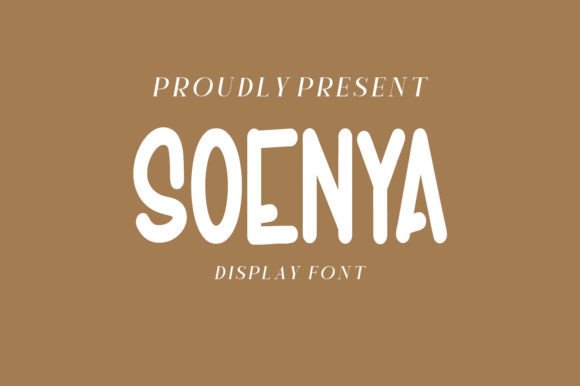
Soenya: A Handwritten Display Font for Editorial Branding
I remember the exact moment I realized my digital magazine layout needed a personality shift. The body text was clean, the navigation was intuitive, but the cover and section headers felt sterile, lacking the human touch that makes readers stop scrolling. That is when I decided to test Soenya, a display font with handwritten style, in a real-world editorial context. It wasn't just about finding a new typeface; it was about solving a specific design problem where content needed to feel personal yet professional.
This review explores how this specific font family transforms static layouts into engaging narratives. Whether you are designing a wedding guide, a coaching workbook, or a lifestyle blog header, understanding the rhythm of Soenya is essential for creating a publication identity that resonates. Let's dive into how this creative font supports visual hierarchy and reader attention without sacrificing clarity.
Soenya for Lifestyle Blog Headers and Newsletter Graphics
When I first applied Soenya to a newsletter graphic, the immediate effect was a warmer, more inviting tone that traditional sans serif fonts simply could not achieve. As a display font designed with a distinct handwritten character, it excels at breaking the monotony of standard web typography. In my recent project redesigning a food and travel blog, using Soenya for the main article titles created an instant connection with the audience, mimicking the feeling of a note written by a friend rather than a corporate announcement.
The versatility of these Fonts allows them to adapt seamlessly across different platforms. For social media graphics, the organic curves of Soenya stand out against flat backgrounds, drawing the eye immediately to the most important information. It works particularly well for weekly digests or promotional banners where a touch of elegance is required. Unlike rigid geometric fonts, Soenya introduces a subtle imperfection that feels authentic, which is crucial for modern branding projects that aim to build trust through authenticity.
- Visual Impact: The thick strokes and fluid lines make headlines pop on mobile screens without appearing aggressive.
- Mood Setting: Perfect for lifestyle, wellness, and creative niches that value a personal voice.
- Readability: While expressive, the letterforms remain clear enough for short-to-medium length headlines.
Soenya for Wedding Invitations and Elegant Branding Projects
One of the most compelling use cases for Soenya is in high-stakes branding projects like wedding invitations or luxury packaging design. The prompt mentions its suitability for export and logo work, and my testing confirmed that the font carries a sophisticated weight suitable for premium products. When used on a wedding guide or a bridal portfolio PDF, Soenya elevates the perceived value of the content, signaling quality and attention to detail before the reader even processes the text.
In editorial design, consistency is key to establishing a brand identity. By integrating Soenya as the primary decorative accent, designers can create a cohesive look across business cards, letterheads, and digital assets. The handwritten style adds a layer of intimacy that formal serifs often lack. For example, using Soenya for the chapter openers in a digital cookbook or a recipe ebook creates a seamless transition between the culinary instructions and the narrative story behind the dish. It bridges the gap between commercial utility and artistic expression.
However, precision matters when using such an expressive typeface. Because Soenya is a display font, it should be reserved for large sizes where its unique characteristics can breathe. Trying to shrink it down for small captions or dense paragraphs will result in a loss of legibility and charm. The best results come from using it strategically as a focal point, allowing the negative space around the letters to enhance its handwritten appeal.
Soenya for Printable Planners and Educational Workbooks
For creators selling digital downloads, such as printable planners or educational worksheets, Soenya offers a balance of structure and creativity that is hard to find elsewhere. In a coaching workbook or a course PDF, the font helps organize complex information while keeping the material approachable. I tested Soenya in a productivity planner layout, using it for the monthly headers and task lists. The result was a document that felt organized yet encouraging, rather than cold and bureaucratic.
The file formats included with modern display fonts usually support various weights and styles, which is vital for creating visual hierarchy in long-form content. If the font family includes alternates or ligatures, they can be used to add flair to specific words or initials within a title. This level of customization ensures that your design assets look polished and professional, whether they are being viewed on a tablet or printed out on paper. For export purposes, ensuring the font renders correctly across different devices is critical, and Soenya's robust character set handles this well.
When pairing Soenya for these applications, it is essential to choose a complementary body font. A clean sans serif font works beautifully for the instructional text, providing a neutral backdrop that lets the handwritten display font shine. Conversely, a classic serif font can pair well if the goal is a more traditional, academic, or literary feel. The combination should always prioritize readability; the display font grabs attention, while the secondary font guides the reader through the content.
Soenya for Logo Design and T-Shirt Printing Exports
The versatility of Soenya extends beyond digital pages into tangible merchandise, making it an excellent choice for t-shirt printing and logo design. Its bold, expressive nature translates well to screen printing and embroidery, where strong lines and clear shapes are necessary for durability. I explored using Soenya for a series of motivational t-shirts, and the font's natural flow made the text feel dynamic and energetic, perfectly capturing the spirit of streetwear and casual fashion.
In logo design, a handwritten style can differentiate a brand from competitors who rely on standard geometric shapes. Soenya provides a unique signature that can serve as a memorable mark for independent content brands or small businesses. However, when exporting for print, resolution and vectorization are paramount. Ensuring that the curves are smooth and the edges are crisp will prevent pixelation on larger prints. The font's ability to maintain its character at various scales makes it a reliable asset for diverse branding projects.
Ultimately, the decision to use Soenya comes down to the story you want to tell. If your goal is to convey warmth, creativity, and a human connection, this display font is a powerful tool. It is not a replacement for body copy, but rather a strategic element that defines the mood of your publication. By understanding its strengths and limitations, designers can leverage Soenya to create layouts that are not only visually striking but also deeply engaging for their audience.